


Care Support
Find Care
Post a job or search by postcode to find a suitable carer.
SIGN UP NOW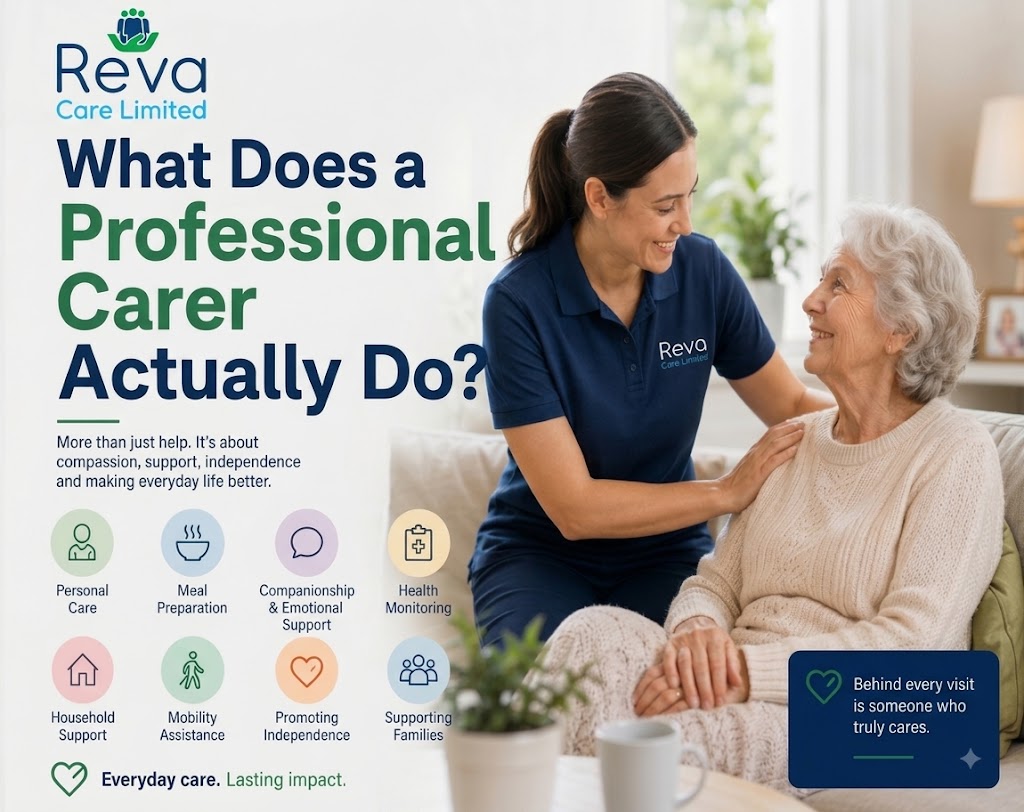
When people hear the term professional carer, they often think of someone helping with daily tasks such as preparing meals or reminding someone to take their medication.
While these responsibilities are certainly important, professional carers do much more than assist with everyday routines.
They help people maintain their independence, improve their quality of life, provide emotional support, and give families peace of mind.
Whether supporting an older adult, someone recovering from surgery, or an individual living with a long-term condition, professional carers play an essential role in helping people live safely and comfortably in their own homes.
So, what does a professional carer actually do?
Let's take a closer look.
One of the primary responsibilities of a professional carer is helping individuals with everyday activities while encouraging them to remain as independent as possible.
Support may include:
Personal care and hygiene
Dressing and grooming
Meal preparation
Medication reminders
Mobility assistance
Household tasks
Shopping and errands
Every care plan is tailored to the individual's unique needs, preferences, and routines.
According to the NHS Social Care and Support Guide, personalised home care helps people remain independent while continuing to live safely in familiar surroundings.
Care isn't only about physical support.
Many people receiving care live alone and may experience loneliness or social isolation.
Professional carers provide valuable companionship by:
Having meaningful conversations
Sharing meals
Going for walks
Encouraging hobbies
Supporting social activities
Sometimes, simply having someone to talk to can make a significant difference to a person's wellbeing.
Research from Age UK highlights that staying socially connected is vital for maintaining emotional and mental wellbeing in later life.
A common misconception is that carers do everything for the people they support.
In reality, great carers encourage individuals to continue doing as much as they safely can themselves.
This might include:
Preparing part of a meal
Choosing clothes independently
Participating in hobbies
Walking short distances with support
Managing daily routines
Supporting independence helps improve confidence, dignity, and overall quality of life.
Professional carers often notice small changes before anyone else.
They may identify:
Reduced mobility
Changes in appetite
Mood changes
Signs of illness
Increased confusion
Medication concerns
Recognising these changes early allows families and healthcare professionals to respond before problems become more serious.
Professional carers don't just support the individual receiving care—they also provide reassurance for families.
Many families cannot be with their loved ones every day.
Knowing someone is providing professional, compassionate support offers valuable peace of mind.
Carers also communicate important updates about wellbeing, routines, and any changes in health.
Many people wish to remain in the comfort of their own homes for as long as possible.
Professional carers help make this possible by supporting safe daily routines, reducing risks around the home, and assisting with activities that may have become more challenging over time.
For many families, home care provides the right balance between independence and practical support.
Some professional carers receive additional training to support people with more complex needs.
This may include:
Dementia care
Parkinson's support
Stroke recovery
Palliative care
Mobility assistance
Medication support
The Skills for Care organisation encourages ongoing professional development to ensure carers continue delivering safe, high-quality care
Perhaps the most important part of a professional carer's role is building trust.
Great carers take time to understand:
Individual preferences
Daily routines
Cultural values
Personal interests
Communication styles
This person-centred approach helps people feel respected, comfortable, and valued.
The National Institute for Health and Care Excellence (NICE) identifies person-centred care as one of the foundations of high-quality health and social care.
Professional carers make a difference in countless ways that often go unnoticed.
They provide reassurance during difficult moments.
They celebrate small achievements.
They encourage confidence.
They help people continue living independently.
Most importantly, they bring compassion into everyday life.
Behind every visit is someone committed to improving another person's wellbeing.
At REVA Care Limited, we believe choosing the right carer should be simple, transparent, and reassuring.
Our platform connects families with verified, experienced, and compassionate professional carers, allowing you to review profiles, qualifications, specialist skills, and availability before making a decision.
Whether you're looking for companionship, personal care, respite care, dementia support, or ongoing home care, REVA Care helps families find trusted professionals who put people first.
Professional carers make an incredible difference every day, but their work often goes unseen.
We've recently shared this topic on LinkedIn and invited families, carers, and healthcare professionals to discuss the everyday impact of professional care.
👉 Join the conversation here:
Have a story about a professional carer who made a difference? We'd love to hear it in the comments.
Professional carers do far more than help with everyday tasks.
They promote independence, provide companionship, monitor wellbeing, support families, and help people continue living safely and confidently in the place they call home.
Their role combines professional expertise with empathy, patience, and genuine compassion.
At REVA Care Limited, we celebrate the incredible work professional carers do every day. Their dedication improves lives, strengthens families, and reminds us that great care is about much more than completing tasks—it's about making every individual feel valued, respected, and supported.
Post a job or search by postcode to find a suitable carer.
SIGN UP NOWRegister your care home and connect directly with suitable carers.
REGISTER CARE HOMECreate your profile, complete verification and find local jobs.
SIGN UP NOW