


Care Support
Find Care
Post a job or search by postcode to find a suitable carer.
SIGN UP NOW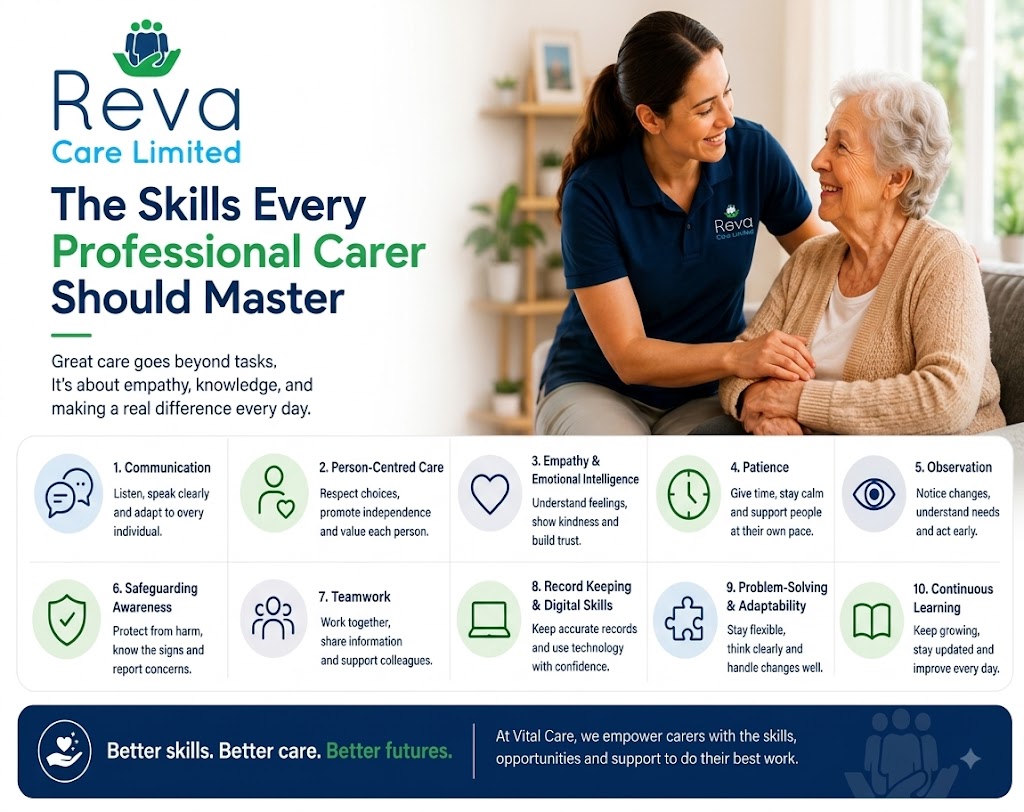
Being a professional carer is about much more than helping someone with their daily routine.
Every day can bring different people, different needs and different situations. One person may need help maintaining their independence, while another may need reassurance, companionship or support with everyday tasks.
That is why being a good carer requires a combination of practical knowledge, communication, patience, judgement and empathy.
Skills for Care highlights values such as dignity, respect, teamwork, quality care and a willingness to learn as important foundations for working in social care.
The right skills don't just help carers do their jobs better. They help the people receiving care feel heard, respected, safe and supported.
So, what skills should every professional carer work towards mastering?
Good care starts with good communication.
A professional carer needs to be able to listen carefully, explain things clearly and adapt their communication depending on the person they are supporting.
Not everyone communicates in the same way. Some people may have hearing difficulties, dementia, learning disabilities, speech difficulties or simply prefer a particular way of communicating.
This means carers need to know when to slow down, when to listen, when to ask questions and when to give someone more time to respond.
Communication is also about noticing what isn't being said.
A change in someone's facial expression, behaviour or body language can sometimes tell a carer something that words don't.
The Care Certificate includes communication as one of its core areas and highlights the importance of adapting communication to the individual and reducing barriers.
There is no one-size-fits-all approach to care.
Two people may have similar care needs but completely different personalities, routines, preferences and goals.
Person-centred care means understanding the person behind the care plan.
What do they enjoy?
What matters to them?
What can they still do independently?
What choices do they want to make?
Professional carers should support people to have as much choice and control as possible rather than automatically doing everything for them.
Skills for Care describes person-centred approaches as putting people, families and communities at the heart of health, care and wellbeing.Useful resource: Skills for Care – Person-Centred Approaches
Care is personal.
A carer may meet someone on a difficult day perhaps they are frustrated, anxious, lonely, confused or simply having a bad day.
The ability to understand someone's emotions without judging them can make a huge difference.
Empathy helps carers respond to the person rather than simply reacting to their behaviour.
For example, instead of thinking:
"They're being difficult."
A professional carer might ask:
"Is there a reason they're feeling uncomfortable or frustrated today?"
That small change in perspective can completely change the way care is delivered.
Not every task will happen quickly.
A person may need more time to get dressed, eat, communicate or make a decision.
Professional carers need the patience to allow people to do things at their own pace wherever possible.
This is particularly important when supporting people living with conditions such as dementia. The NHS recommends giving people time to respond and using calm, clear communication rather than rushing conversations.
Patience doesn't mean doing nothing.
It means understanding when to step in and when to give someone space to do something themselves.
A good carer pays attention.
Sometimes small changes can be important.
A person might:
Eat less than usual
Become quieter
Appear more tired
Move differently
Lose interest in activities
Become unusually confused
Have a change in mood
Carers aren't expected to diagnose medical conditions, but they should know when something seems different and understand when it needs to be reported or escalated appropriately.
Good observation can therefore become an important part of keeping someone safe and supporting continuity of care.
One of the most important responsibilities in care is helping protect people from abuse, neglect and avoidable harm.
Professional carers need to understand what safeguarding means, recognise potential warning signs and know how concerns should be reported according to their organisation's procedures.
Skills for Care states that everyone working in adult social care needs to understand how their role contributes to the safety of the people they support.
Safeguarding is not simply another training module.
It is part of everyday professional responsibility.
Care is rarely delivered by one person alone.
Depending on the situation, a carer may work alongside other carers, family members, care coordinators, nurses, healthcare professionals or care-home teams.
Good teamwork means:
Sharing relevant information
Communicating clearly
Respecting other people's responsibilities
Asking for help when needed
Following agreed care plans and procedures
A strong team can provide more consistent support because everyone understands what is happening and what the person needs.
Care increasingly involves digital systems.
Carers may need to access care plans, record information, communicate with teams, update notes or use digital platforms to manage their work.
Being comfortable with technology therefore isn't just a bonus anymore.
It can be an important part of delivering organised and consistent care.
Accurate records also matter because the information recorded by one professional may help another person understand what has happened and what needs to happen next.
Skills for Care highlights the importance of English, number, digital and employability skills, including problem-solving and teamwork, for people working in social care.
Care doesn't always go according to plan.
A scheduled activity might not work.
A person's needs might change.
A shift might suddenly become more challenging than expected.
Professional carers need to stay calm, think practically and know when they can adapt and when they need to seek additional support.
Being adaptable doesn't mean ignoring procedures.
It means being able to respond appropriately while keeping the person's safety, dignity and wellbeing at the centre.
Perhaps the most important skill of all is the willingness to keep learning.
Care is constantly evolving, and different people require different approaches.
Professional development can help carers build confidence, strengthen existing skills and develop new ones.
The current Care Certificate standards define the knowledge, skills and behaviours expected in specific health and social care roles, and the standards were updated in 2025.
Technical knowledge is important.
Training is important.
Experience is important.
But great care happens when these things come together with compassion, respect and genuine understanding.
A professional carer doesn't simply complete a list of tasks.
They build trust.
They notice the small things.
They support independence.
They listen.
And they help someone feel that their choices and preferences still matter.
That is what turns care into quality care.
What skill do you think makes the biggest difference in professional care?
Is it empathy? Communication? Patience? Adaptability? Or something that doesn't get talked about enough?
Care is constantly evolving, and so are the skills carers need to provide the best possible support.
We’d love to hear your perspective.
💬 Join the conversation on LinkedIn and share the skill you believe every professional carer should master.
👉 Follow REVA Care on LinkedIn for more insights, conversations and resources around care and careers in care.
The best professional carers never stop developing.
Every person they support teaches them something new. Every conversation can improve their communication. Every situation can strengthen their judgement.
Because ultimately, being a great carer isn't about knowing everything.
It's about having the right skills, being willing to learn and always putting the person first.
At REVA Care, we believe carers deserve opportunities where their skills, experience and commitment to care can be recognised and valued.
Because better care starts with people who care.
Post a job or search by postcode to find a suitable carer.
SIGN UP NOWRegister your care home and connect directly with suitable carers.
REGISTER CARE HOMECreate your profile, complete verification and find local jobs.
SIGN UP NOW