


Wellness
Find Care
Post a job or search by postcode to find a suitable carer.
SIGN UP NOW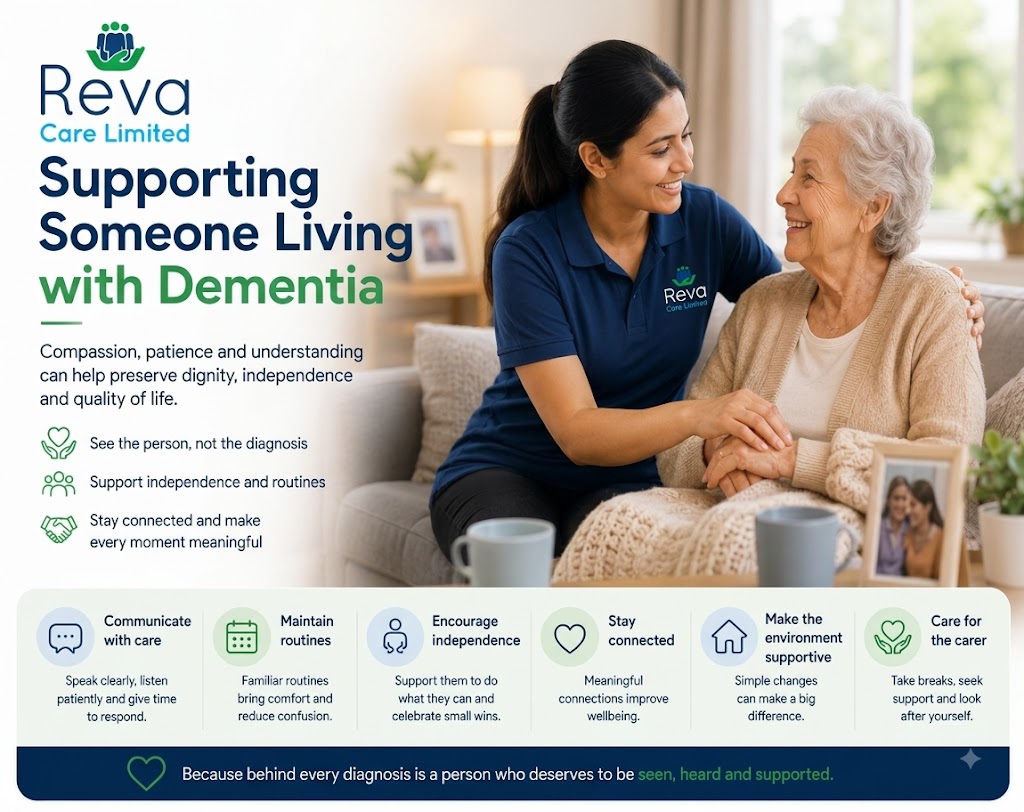
Supporting someone living with dementia can be challenging, especially when the person you know begins to communicate, behave or respond differently.
But dementia does not change who someone is.
A person living with dementia still has their own personality, preferences, memories, relationships and routines. What changes is the kind of support they may need to continue living safely and meaningfully.
The NHS emphasises that everyone experiences dementia differently and that, with the right support, many people can continue to live well and independently for years.
For families and professional carers, the goal isn't to take over someone's life.
It's to support them while helping them remain as independent, involved and connected as possible.
Dementia can become the focus of everyday life.
Appointments, medication, routines and care needs can sometimes overshadow the person behind them.
But good support starts by asking:
Who is this person?
What do they enjoy?
What makes them comfortable?
What are their favourite activities?
What routines have always mattered to them?
What can they still do independently?
A diagnosis doesn't erase someone's identity.
The NHS recommends focusing on the things a person with dementia can still do and enjoy, while supporting them to remain socially active and involved in their lives.
Communication can become more difficult as dementia progresses.
Someone may struggle to find the right word, repeat themselves, lose track of a conversation or take longer to respond.
This can be frustrating for everyone involved.
The solution isn't to speak louder, rush them or finish every sentence.
Instead:
Speak clearly and calmly
Use short, simple sentences
Give them time to respond
Maintain eye contact
Reduce background distractions
Ask simple questions
Give them manageable choices
Avoid interrupting
Pay attention to facial expressions and body language
The NHS specifically recommends giving people time to respond, using simple choices and adapting communication when someone with dementia finds it difficult to express themselves.
One of the most difficult moments for families can be when someone with dementia says something that isn't factually correct.
The natural reaction may be:
"No, that's not right."
But constantly correcting someone can create frustration, embarrassment or distress.
Sometimes, the more helpful response is to understand what they are trying to communicate or feel.
If someone appears worried about something that isn't happening in reality, consider the emotion behind their words.
Are they frightened?
Confused?
Looking for reassurance?
Missing someone?
Good support isn't always about correcting a memory.
Sometimes it's about providing comfort and reassurance.
Routine can provide a sense of structure and familiarity.
Sudden changes can sometimes be confusing or unsettling, particularly when someone is already finding it difficult to process information.
A familiar routine might include:
Getting up at a regular time
Having meals at familiar times
Going for a daily walk
Listening to favourite music
Doing familiar household activities
Speaking to family members regularly
Keeping favourite hobbies
Routines shouldn't become rigid rules.
Instead, they can provide a familiar framework while allowing the person to make choices and adapt as their needs change.
One of the easiest mistakes to make when supporting someone with dementia is doing everything for them.
It may seem quicker.
But taking over tasks that someone can still do themselves can gradually reduce their confidence and independence.
Instead, provide the amount of help they actually need.
For example, rather than dressing someone completely, you might lay out their clothes and allow them to choose what to wear.
Instead of preparing every part of a meal, you could involve them in simple steps.
The NHS recommends supporting people with dementia to maintain their skills and abilities and encouraging them to remain involved in everyday activities.
Dementia can sometimes lead people to withdraw from conversations, hobbies or social activities.
But staying connected can support confidence, identity and wellbeing.
That could mean:
Visiting friends
Going for walks
Joining a local activity
Listening to music together
Looking through photographs
Attending a dementia-friendly activity
Having regular family conversations
Social connection doesn't have to mean a busy social calendar.
Sometimes one familiar person and one meaningful conversation can be enough to make someone's day better.
The NHS recommends maintaining social activity and highlights dementia-friendly groups and community activities as potential ways of staying connected.
The environment around someone can influence how comfortable and independent they feel.
Simple changes can make everyday tasks easier.
For example:
Clear labels on cupboards or drawers
Good lighting
Familiar objects in familiar places
Reduced clutter
Clear pathways around the home
Visible clocks or calendars
Easy access to commonly used items
The NHS suggests using memory aids such as labels and signs around the home to help people remember where things are.
Sometimes dementia can lead to changes in behaviour.
Someone may become:
Anxious
Irritable
Restless
Withdrawn
Confused
Frustrated
Instead of immediately asking:
"How do we stop this behaviour?"
It can be more helpful to ask:
"What might this behaviour be telling us?"
Perhaps they're uncomfortable.
Maybe they're tired.
They might be hungry, overwhelmed by their surroundings, struggling to communicate or looking for reassurance.
Understanding the possible reason behind a behaviour can help carers respond more thoughtfully.
Supporting someone with dementia can be emotionally and physically demanding.
Family members sometimes don't even identify themselves as carers because they're simply looking after a parent, partner or friend.
But they may still need support themselves.
The NHS recommends that people caring for someone with dementia consider accessing support, including a carer's assessment, training and opportunities to take breaks.
Taking a break isn't selfish.
It can help you continue providing better support.
For some families, providing all the support themselves becomes difficult over time.
A professional carer can become an important part of the support network.
Depending on the person's needs, this may include:
Companionship
Support with everyday activities
Meal preparation
Help maintaining routines
Support with appointments
Assistance around the home
Encouragement to remain independent
Regular communication with family members
The most effective support is personalised.
A professional carer shouldn't simply follow a checklist.
They should understand the individual and adapt their approach to their preferences, abilities and changing needs.
Good dementia care isn't about doing everything for someone.
It's about helping someone continue being themselves for as long as possible.
It can mean:
Listening instead of rushing.
Supporting instead of taking over.
Reassuring instead of arguing.
Adapting instead of expecting things to stay the same.
And most importantly:
Seeing the person, not just the dementia.
At REVA Care, we believe finding the right professional carer is about more than finding someone who is available.
Families need to be able to find professionals whose experience, skills and availability match their loved one's individual needs.
For someone living with dementia, that relationship can be especially important.
A familiar and compassionate carer can provide consistency, companionship and practical support while helping the person maintain their routines and independence.
Supporting someone with dementia can look different for every family.
💭 What's one thing you've learned about supporting someone living with dementia that you wish more people understood?
Maybe it's about communication.
Maybe it's about patience.
Maybe it's about maintaining independence.
Or perhaps it's simply the importance of treating the person with the same dignity and respect as always.
We'd love to hear your perspective.
👉 Join the conversation on LinkedIn:
[Insert LinkedIn Post URL]
And follow REVA Care for more conversations and practical insights around care, carers and better support.
Supporting someone living with dementia isn't about finding the perfect response every time.
There will be difficult days.
There will be moments of confusion.
And there will be times when even the simplest things feel challenging.
But patience, understanding and person-centred support can make a meaningful difference.
Because behind every diagnosis is a person with a lifetime of experiences, relationships, preferences and stories.
Good care doesn't try to change who they are. It helps them continue to be who they are.
Post a job or search by postcode to find a suitable carer.
SIGN UP NOWRegister your care home and connect directly with suitable carers.
REGISTER CARE HOMECreate your profile, complete verification and find local jobs.
SIGN UP NOW