


Care Support
Find Care
Post a job or search by postcode to find a suitable carer.
SIGN UP NOW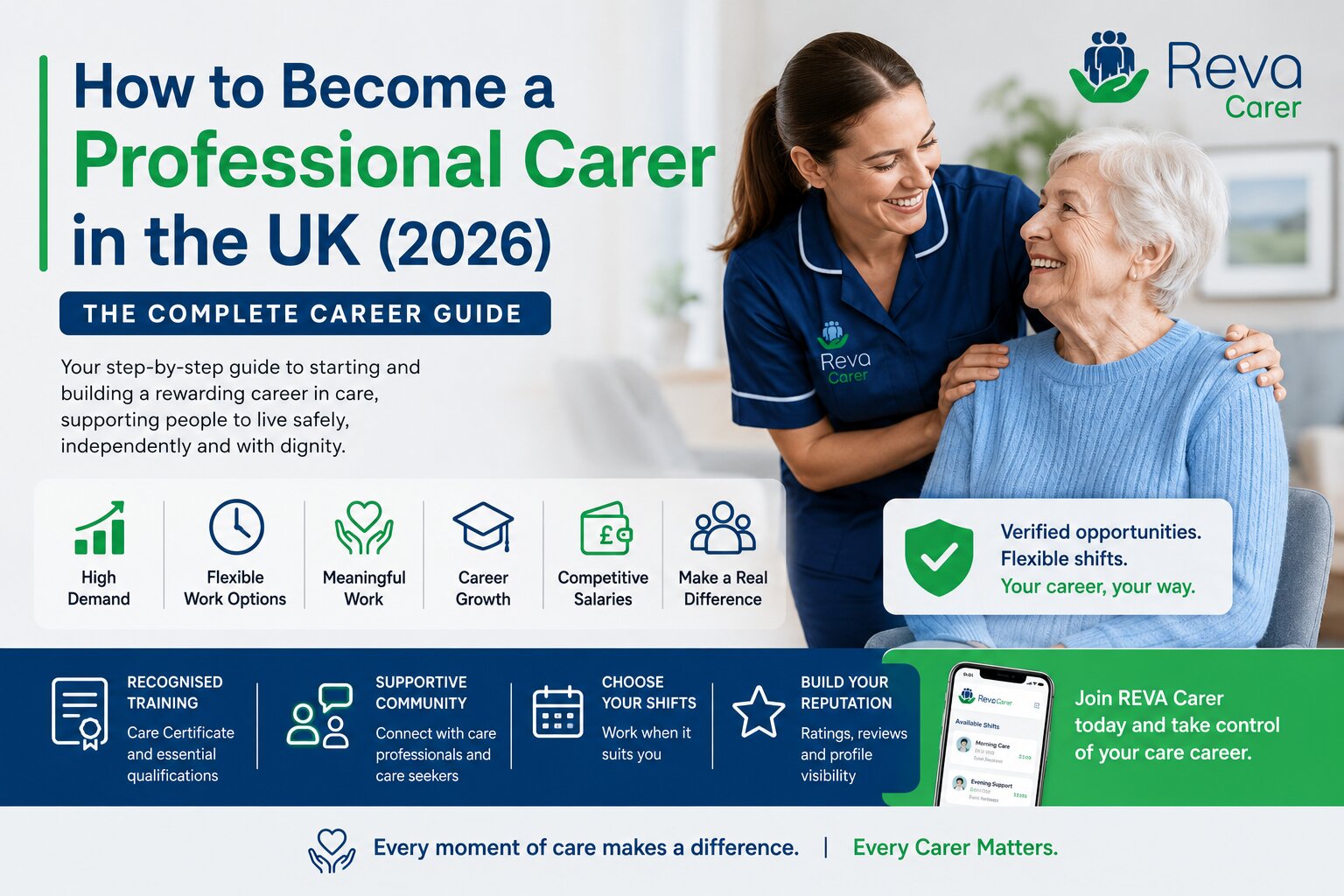
The UK's adult social care sector is one of the country's fastest-growing industries, offering rewarding careers for people who want to make a genuine difference in others' lives. Whether you're considering your first role in care, changing careers, or returning to work after a break, becoming a professional carer can provide long-term career stability, flexible working opportunities, and meaningful day-to-day work.
Demand for qualified care professionals continues to increase as the UK's ageing population grows and more people choose to receive care in their own homes or community settings. According to the Office for National Statistics (ONS), the number of older adults is projected to rise significantly over the coming decades, creating sustained demand for skilled health and social care professionals.
Professional carers today do much more than provide personal care. They help people maintain independence, support individuals with disabilities, assist older adults living with dementia, provide companionship, encourage medication routines, and improve overall quality of life.
Digital platforms are also transforming the profession. Instead of relying solely on traditional recruitment agencies, many carers now choose flexible opportunities through platforms such as REVA Carer, allowing them greater control over when, where and how they work.
Choosing a career in care means choosing a profession where your work has a direct and lasting impact on people's lives. Unlike many careers that focus solely on business outcomes, care professionals build meaningful relationships while supporting individuals to live independently, safely and with dignity.
The UK social care sector also offers strong employment prospects. Skills for Care, the strategic workforce development body for adult social care in England, continues to highlight the need for thousands of additional care professionals each year to meet growing demand.
Some of the biggest reasons people choose a career in care include:
High Demand
Care professionals remain in demand across residential care homes, nursing homes, supported living services, domiciliary care providers, private care organisations and community healthcare services.
As the UK's population ages and healthcare needs become more complex, employers continue recruiting compassionate and reliable care professionals throughout England, Scotland, Wales and Northern Ireland.
Flexible Working
One of the biggest advantages of working in care is flexibility.
Depending on the employer, carers may choose from:
Full-time positions
Part-time work
Weekend shifts
Evening shifts
Overnight care
Live-in care
Temporary assignments
Flexible shift work
Digital platforms such as REVA Carer provide even greater flexibility by allowing professionals to browse available opportunities, review shift details and choose work that fits around their personal commitments.
Meaningful Work
Every shift provides an opportunity to improve someone's quality of life.
Professional carers often help clients:
Maintain independence
Build confidence
Stay socially connected
Manage long-term conditions
Recover after illness
Remain safely at home
Many carers describe the emotional rewards of helping others as one of the most fulfilling aspects of the profession.
Career Stability
Healthcare remains one of the UK's most resilient employment sectors.
Unlike industries that fluctuate with economic cycles, adult social care continues to require skilled professionals due to increasing demand from an ageing population and ongoing workforce shortages.
This creates long-term opportunities for individuals seeking career stability and progression.
One of the biggest misconceptions about working in care is that applicants must already have years of healthcare experience.
In reality, many employers recruit individuals based on their attitude, compassion and willingness to learn rather than previous care experience.
Entry-level positions are often open to applicants from diverse backgrounds, including:
Retail
Hospitality
Customer service
Teaching
Administration
Childcare
Volunteering
Military service
Recent graduates
Career changers
While some specialist roles require additional qualifications, many employers provide structured induction training and ongoing professional development.
According to Skills for Care, personal values are among the strongest predictors of success within adult social care.
Successful carers commonly demonstrate:
Empathy
Compassion
Patience
Reliability
Professionalism
Respect
Strong communication
Adaptability
Emotional resilience
Problem-solving ability
These qualities often matter more than previous experience because technical skills can be taught, while genuine compassion and professionalism are developed over time.
Although many care roles do not require a university degree, employers increasingly value recognised training and professional development.
Completing relevant qualifications not only improves employability but also builds the confidence and practical knowledge needed to deliver safe, person-centred care.
The Care Certificate
The Care Certificate is widely recognised as the benchmark induction programme for new care workers in England.
Developed jointly by Skills for Care, NHS England, and Skills for Health, it introduces new professionals to the core standards expected across adult social care.
The Care Certificate covers:
Duty of care
Safeguarding adults
Safeguarding children
Infection prevention and control
Privacy and dignity
Equality and diversity
Communication
Basic life support
Health and safety
Person-centred care
DBS Checks
Most employers require an Enhanced Disclosure and Barring Service (DBS) check before carers begin working with vulnerable adults.
The DBS process helps employers recruit suitable individuals while protecting people receiving care.
Additional Training
Many employers also encourage carers to complete specialist training, including:
First Aid
Manual Handling
Completing additional certifications can improve employability and open pathways into specialist care roles.
Dementia Awareness
Medication Administration
End of Life Care
Mental Health Awareness
Autism Awareness
Infection Prevention
Moving and Positioning
Food Hygiene
Completing additional certifications can improve employability and open pathways into specialist care roles.
Being a professional carer requires much more than completing training courses or obtaining certifications. The most successful carers combine technical knowledge with interpersonal skills that allow them to provide safe, compassionate and person-centred care.
As outlined in the Care Certificate Standards developed by Skills for Care, professional carers are expected to demonstrate competence across communication, safeguarding, privacy, dignity and person-centred care.
Below are some of the most valuable skills employers look for when recruiting professional carers.
Compassion and Empathy
Providing care begins with understanding another person's needs, preferences and emotions.
Whether supporting an elderly person living with dementia or assisting an adult recovering from surgery, carers must be able to build trust while treating every individual with dignity and respect.
Compassion helps carers develop meaningful relationships with clients while improving overall wellbeing and quality of life.
Communication Skills
Communication is one of the most important skills in adult social care.
Professional carers regularly communicate with:
Clients
Family members
Registered managers
Nurses
GPs
Occupational therapists
Other carers
Good communication helps ensure care plans are followed correctly while reducing misunderstandings that could affect a client's wellbeing.
Patience
Every individual receives care differently.
Some clients may require additional time due to mobility issues, dementia, learning disabilities or long-term health conditions.
Professional carers understand that delivering high-quality care often means adapting their pace to meet the individual's needs.
Observation Skills
Small changes in a person's health can sometimes indicate larger concerns.
Professional carers should be able to notice changes such as:
Reduced appetite
Mood changes
Mobility difficulties
Increased confusion
Skin changes
Breathing difficulties
Signs of dehydration
Early observation allows concerns to be reported promptly to senior staff or healthcare professionals.
Time Management
Many carers support multiple clients during a shift.
Effective time management helps professionals:
Arrive on time
Complete care tasks safely
Record notes accurately
Respond to unexpected situations
Maintain high standards throughout the day
Emotional Resilience
Working in care can be emotionally rewarding, but it can also be challenging.
Professional carers may support individuals experiencing illness, bereavement or end-of-life care.
Maintaining professionalism while looking after personal wellbeing is an essential part of a sustainable career in care.
The NHS also provides guidance on supporting wellbeing in health and care professions.
One of the greatest advantages of working in adult social care is the wide variety of career opportunities available.
Many professionals begin as entry-level care workers before progressing into specialist or leadership roles.
Common career pathways include:
Domiciliary Care Worker
Supporting individuals in their own homes with personal care, meal preparation, medication reminders and companionship.
Live-in Carer
Providing full-time support while living in the client's home.
Senior Care Worker
Leading care teams, mentoring new carers and ensuring high-quality service delivery.
Dementia Care Specialist
Supporting people living with Alzheimer's disease and other forms of dementia.
Learning Disability Support Worker
Helping individuals develop independence and life skills while supporting community participation.
Complex Care Professional
Providing specialist support for clients with long-term medical conditions, neurological disorders or physical disabilities.
Registered Manager
Managing care services, supervising teams and ensuring compliance with Care Quality Commission (CQC) regulations.
Career Development
The Skills for Care Workforce Pathway outlines recognised progression routes across adult social care, helping professionals develop leadership, specialist knowledge and advanced responsibilities.
Salaries vary depending on experience, qualifications, employer, location and the type of care provided.
According to the National Careers Service, entry-level care workers can expect competitive starting salaries with opportunities for increased earnings through additional training, specialist care roles and supervisory positions.
Typical Salary Ranges
|
Role |
Average Salary |
|
Care Assistant |
£24,000–£28,000 |
|
Senior Care Worker |
£28,000–£34,000 |
|
Live-in Carer |
£35,000–£45,000+ |
|
Care Coordinator |
£30,000–£38,000 |
|
Registered Manager |
£40,000–£60,000+ |
Actual salaries vary depending on employer, experience, qualifications and location.
Many carers also increase their income through:
Weekend shifts
Bank holidays
Night shifts
Overtime
Specialist care assignments
Flexible platform work
Platforms such as REVA Carer allow professionals to browse available opportunities and choose shifts that fit their availability.
Unlike many industries where advancement depends solely on years of service, adult social care rewards continuous learning, practical experience and leadership potential.
A typical career journey may look like this:
Year 1–2
✔ Care Assistant
✔ Care Certificate
✔ Mandatory Training
Year 3–5
✔ Senior Care Worker
✔ Medication Administration
✔ Dementia Care
✔ Team Mentoring
Year 5–8
✔ Care Coordinator
✔ Deputy Manager
✔ Specialist Qualifications
Year 8+
✔ Registered Manager
✔ Regional Operations
✔ Care Quality Leadership
The Care Workforce Pathway, launched by the Department of Health and Social Care and Skills for Care, provides structured guidance for career development within adult social care.
No two days in care are ever the same.
A typical shift may include:
7:30 AM
Morning handover and review of care plans.
8:00 AM
Assist clients with personal care, dressing and medication.
10:30 AM
Prepare meals and encourage hydration.
12:00 PM
Support mobility exercises or accompany clients to appointments.
2:00 PM
Update digital care records and communicate observations to the wider care team.
4:00 PM
Provide companionship, emotional support and recreational activities.
6:00 PM
Evening medication, meal support and shift handover.
While routines vary, every interaction focuses on delivering safe, respectful and person-centred care.
The care industry is evolving. While traditional recruitment agencies remain an important part of the sector, digital technology is changing how professional carers discover work, manage their schedules and build long-term careers.
Today's care professionals increasingly value flexibility, transparency and greater control over the opportunities they accept. Rather than waiting for agencies to assign shifts, many carers now prefer platforms that allow them to explore available work, review requirements in advance and choose opportunities that fit their lifestyle.
REVA Carer has been designed with this shift in mind.
Instead of replacing existing employment options, REVA Carer provides an additional route for qualified care professionals to connect with care providers looking for verified temporary or flexible support.
Why More Carers Want Flexible Working
Work-life balance has become an important consideration across many professions, and adult social care is no exception.
Professional carers often balance work alongside:
Family responsibilities
University or further education
Additional training
Part-time employment
Personal wellbeing
Retirement planning
Flexible working allows professionals to accept shifts that fit around these commitments while continuing to develop valuable experience.
According to Skills for Care, offering greater flexibility is one of the ways employers can attract and retain skilled professionals in adult social care.
Greater Transparency Before Accepting Work
One challenge many temporary workers experience is accepting assignments without knowing enough about the role beforehand.
Having access to key information before accepting a shift helps professionals make informed decisions.
For example, carers often want to understand:
Shift duration
Location
Required experience
Greater transparency benefits both carers and care providers by improving confidence before a booking is confirmed.
A More Flexible Way to Find Opportunities
REVA Carer enables professionals to explore available opportunities in a way that fits modern working preferences.
Depending on availability, carers can use the platform to:
Browse available care opportunities
Review job requirements
Build and maintain a professional profile
Manage availability
Choose suitable assignments
Develop ongoing relationships with care providers
This approach provides greater visibility while allowing professionals to make informed decisions about the work they undertake.
Type of care needed
Client requirements
Expected responsibilities
Future of the Care Industry
The future of adult social care in the UK looks both challenging and full of opportunity.
Demand for skilled professionals continues to increase due to several long-term trends, including:
An ageing population
Longer life expectancy
According to the Office for National Statistics (ONS), the proportion of older adults within the UK population will continue to grow, placing increasing demand on health and social care services.
Advances in healthcare
Increased preference for receiving care at home
Growing awareness of person-centred care
Expansion of community-based healthcare
The Government has also introduced the Care Workforce Pathway, designed to strengthen professional development, improve retention and create clearer career progression within adult social care.
For individuals entering the profession today, this creates an environment with growing demand, expanding career opportunities and increasing recognition of professional care as a skilled career.
Building a successful career in adult social care requires more than qualifications—it requires access to opportunities that align with your skills, experience and availability.
REVA Carer has been created to support professional carers by providing a modern, flexible way to explore care opportunities while maintaining greater control over how they work.
With REVA Carer you can:
Create a professional profile
Showcase your experience and qualifications
Browse available care opportunities
Review requirements before applying
Manage your availability
Connect with verified care providers
Access flexible work opportunities
Build long-term professional relationships
Whether you're starting your first care role, returning to the profession or looking for greater flexibility, REVA Carer helps you take the next step in your career with confidence.
A career in care is about more than employment—it's about improving lives, supporting independence and making a meaningful difference every day.
As the UK's care sector continues to grow, skilled and compassionate professionals will remain at the heart of high-quality care.
Whether you're beginning your journey or looking for more flexibility in your existing career, REVA Carer provides another way to connect with care providers and discover opportunities that suit your experience and availability.
Download REVA Carer, create your professional profile and take the next step in your care career today.
Post a job or search by postcode to find a suitable carer.
SIGN UP NOWRegister your care home and connect directly with suitable carers.
REGISTER CARE HOMECreate your profile, complete verification and find local jobs.
SIGN UP NOW