


Care Support
Find Care
Post a job or search by postcode to find a suitable carer.
SIGN UP NOW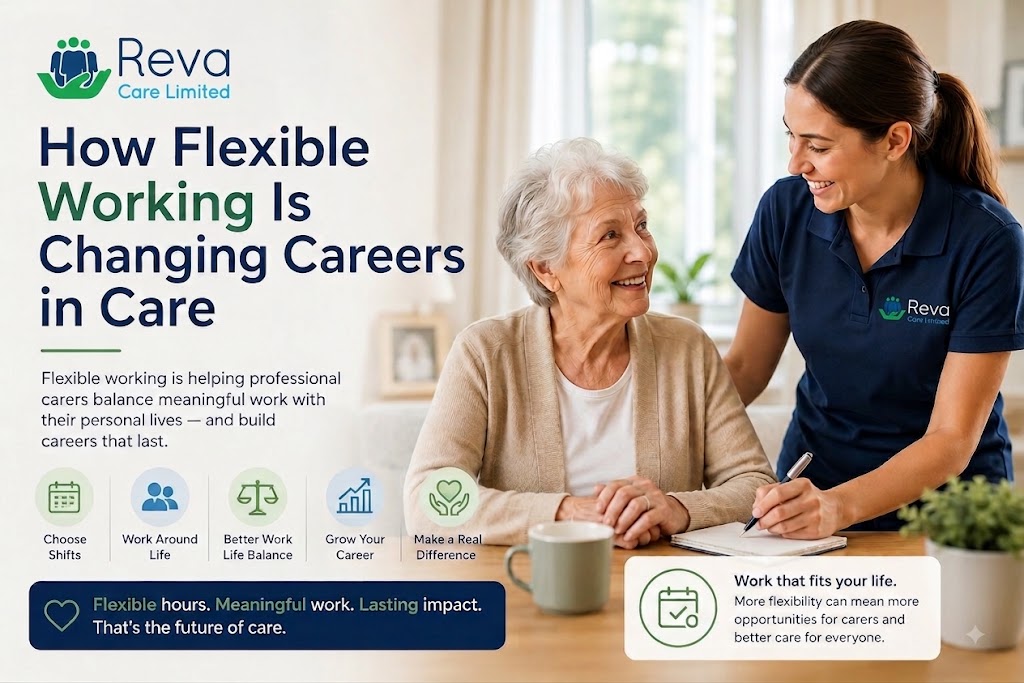
For years, working in care has often been associated with fixed schedules, long shifts, and limited flexibility.
But the way people work is changing and the care sector is changing with it.
Today, professional carers are looking for careers that allow them to balance meaningful work with family responsibilities, personal commitments, education, and their own wellbeing.
Flexible working is becoming an increasingly important part of that conversation.
For care providers, flexibility can also become a powerful way to attract, support, and retain talented professionals in a sector that continues to need skilled workers.
In England, Skills for Care reported that the adult social care vacancy rate fell to 6.2% in 2025/26 the lowest level in a decade but this still represented around 96,000 vacancies on any given day.
So, could greater flexibility be part of the answer?
Flexible working doesn't necessarily mean working from home.
Care is a people-focused profession, so many roles need carers to be physically present with the people they support.
Instead, flexibility in care can take different forms, including:
Choosing suitable shifts
Part-time working
Flexible start and finish times
Shorter or longer shifts where appropriate
Weekend or evening availability
Temporary or occasional work
Working around childcare or other caring responsibilities
Taking on care assignments that fit personal availability
The exact options depend on the role, employer, service requirements, and the needs of the person receiving care.
The UK Government recognises flexible working as an important tool for helping people balance employment with responsibilities outside work.
People enter care for many different reasons.
Some want a long-term career. Others may be studying, raising children, caring for a family member, returning to work, or looking for work that fits around another commitment.
A rigid schedule can make it difficult for some talented people to enter or remain in the profession.
Flexible working can help create opportunities for people who might otherwise struggle to fit traditional working patterns around their lives.
For example, a carer might want to:
Work around school hours
Continue studying
Support their own family
Take on additional shifts when available
Reduce their hours temporarily
Return to work after a career break
Build experience gradually
The result can be a care career that feels more sustainable over the long term.
Recruitment is only one part of the challenge.
Keeping experienced carers is equally important.
Skills for Care identifies pay and working conditions as important factors in retaining a skilled and motivated adult social care workforce. Its recent work on retention highlights the importance of valuing carers' time, effort, and wellbeing.
When carers have greater control over when and how they work, they may find it easier to build a career that fits their circumstances.
That can matter at different stages of life.
A parent may need different hours than a university student.
Someone approaching retirement may want fewer shifts.
Another carer may want to increase their hours and take on more responsibility.
Flexibility allows careers to evolve.
There is sometimes a misconception that flexible working means compromising on quality.
It doesn't have to.
Good flexible working still requires:
Appropriate qualifications
Safeguarding
Reliable communication
Clear responsibilities
Professional standards
Continuity of care
Appropriate training
Safe staffing
The person receiving care must remain at the centre of every decision.
Flexibility should make the workforce more sustainable not make care less reliable.
Skills for Care's Care Workforce Pathway sets out the knowledge, skills, values, and behaviours needed across adult social care roles, reinforcing the importance of professional development alongside workforce flexibility.
Care is rewarding, but it can also be demanding.
Carers spend their working days supporting people with different physical, emotional, and practical needs.
Having some control over working patterns can make it easier to manage responsibilities outside work and protect personal wellbeing.
The UK's current employment framework also gives eligible employees a statutory right to request flexible working, with changes introduced in April 2024.
For carers, flexibility can therefore be more than a workplace benefit.
It can be an important part of creating a sustainable career.
One of the biggest advantages of flexible working is the ability to reach a wider pool of potential carers.
People who may have previously found care work difficult to access could have more opportunities when working arrangements are designed around different lifestyles.
This could include:
Who need working hours that fit around childcare.
Who want to gain valuable professional experience while continuing their education.
Who need employment that can coexist with responsibilities at home.
Who want to rebuild their confidence and experience gradually.
Who want to continue working but prefer fewer or more adaptable hours.
The UK Government has specifically highlighted that advertising flexible working arrangements can help employers attract a wider and more diverse group of applicants.
Technology is also changing how care opportunities can be organised.
Digital platforms can make it easier for carers to:
View available opportunities
Understand care requirements
Check schedules
Manage availability
Communicate with care providers
Find work that matches their skills
Build their professional profile
Instead of relying entirely on traditional recruitment processes, technology can create a more transparent connection between carers and the people or organisations looking for care support.
But technology should support the human side of care not replace it.
The relationship between a carer and the person they support remains at the heart of quality care.
The future of care careers may not be about choosing between flexibility and professionalism.
It can be about combining the two.
A modern care career can provide:
Flexibility + Professional Development + Meaningful Work + Career Progression
Skills for Care says the adult social care workforce needs clearer entry and progression routes, accessible training, and opportunities for learning and career development.
This is important because flexibility shouldn't mean carers have to choose between a manageable schedule and a genuine career path.
They should be able to have both.
At REVA Care Limited, we believe professional carers deserve opportunities that recognise both their skills and their individual circumstances.
Our platform helps connect carers with care opportunities while allowing them to showcase their experience, skills, and availability.
This creates a more transparent way for carers to find opportunities that can fit their professional goals and personal schedules.
For families and care seekers, it also means having the opportunity to connect with professionals whose experience and availability match their individual care requirements.
It's easy to think of flexible working as simply being able to choose when you work.
But its impact can be much bigger.
It can help someone enter the care profession.
It can help an experienced carer stay in the sector.
It can allow a parent to continue building a career.
It can give someone returning to work the confidence to start again.
And ultimately, a workforce that feels supported and valued can help create a stronger care system.
We’ve also shared this topic on LinkedIn and would love to hear your perspective.
👉 Join the conversation:
[ LinkedIn Post ]
What do you think? Share your thoughts, experience, or perspective in the comments.
The future of care needs skilled, compassionate professionals.
But attracting and retaining those professionals may require us to rethink what a care career can look like.
Flexible working offers one way to make the profession more accessible, sustainable, and adaptable—without losing sight of professional standards or the needs of the people receiving care.
Because a career in care shouldn't have to mean putting the rest of your life on hold.
When carers have the flexibility to build work around their lives, they can build careers that last.
At REVA Care, we're working towards a future where carers have more opportunities, more flexibility, and more control over their professional journey.
Post a job or search by postcode to find a suitable carer.
SIGN UP NOWRegister your care home and connect directly with suitable carers.
REGISTER CARE HOMECreate your profile, complete verification and find local jobs.
SIGN UP NOW