


Wellness
Find Care
Post a job or search by postcode to find a suitable carer.
SIGN UP NOW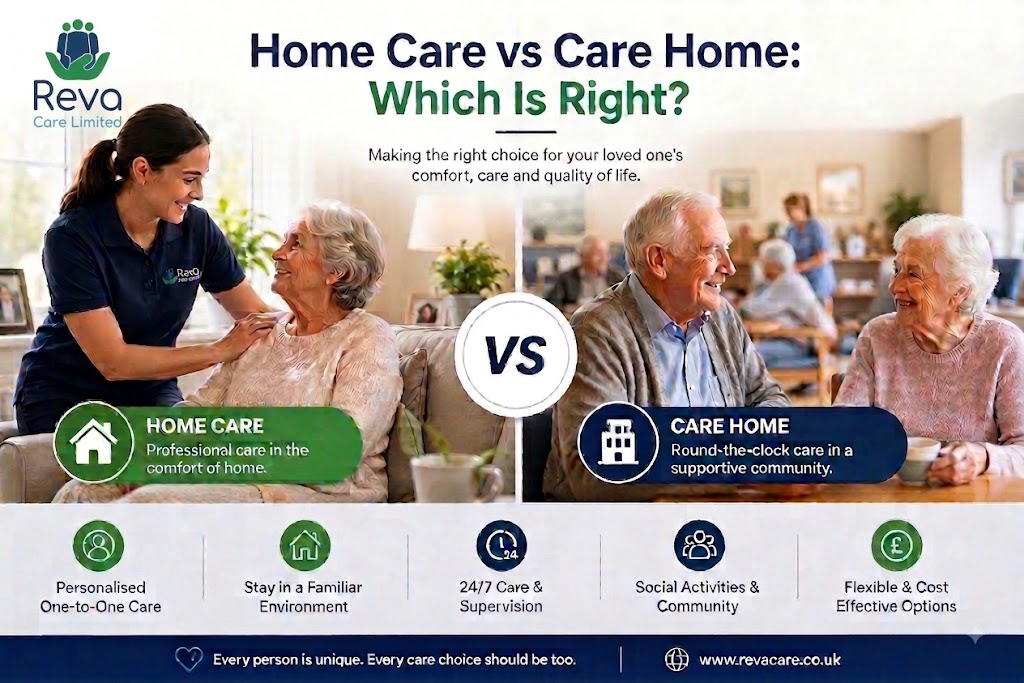
Choosing the right type of care for a loved one is one of the most significant decisions a family can make. Whether it's due to ageing, illness, recovery after hospital treatment, or increasing support needs, the goal is always the same: ensuring safety, comfort, and the best possible quality of life.
One of the most common questions families ask is:
Should we choose home care or a care home?
The answer isn't always straightforward. Both options offer valuable support, but the right choice depends on your loved one's needs, preferences, health, and lifestyle.
This guide explores the differences between home care and care homes, helping you make an informed decision with confidence.
Home care allows individuals to receive professional support while continuing to live in their own home.
Depending on individual needs, professional carers can provide assistance with:
Personal care and hygiene
Medication reminders or support
Meal preparation
Mobility assistance
Companionship
Housekeeping
Dementia care
Respite care
Overnight or live-in care
The key advantage is that individuals remain in familiar surroundings while receiving personalised support tailored to their daily routines.
According to the NHS Social Care and Support Guide, many people prefer receiving care at home because it allows them to maintain independence and stay connected to their community.
A care home is a residential setting where trained staff provide accommodation, meals, and around-the-clock support.
Care homes are often suitable for people who:
Some care homes specialise in dementia care, while others provide nursing services for individuals with more advanced health conditions.
Residents benefit from structured routines, social activities, and immediate access to professional support.
One of the biggest advantages of home care is maintaining independence.
Individuals continue living in familiar surroundings, keep their routines, and remain close to neighbours, friends, and local communities.
Professional carers provide support without taking away personal choice.
Moving into a care home usually involves adapting to a shared environment with scheduled routines and communal living.
Although care homes encourage independence wherever possible, residents often have less flexibility than those receiving care at home.
Home care is built around one individual.
Care plans are tailored to personal preferences, routines, hobbies, dietary requirements, and health needs.
This person-centred approach ensures support is as unique as the individual receiving it.
Care homes also provide personalised care, but staff typically support multiple residents throughout the day.
While care remains individualised, time and attention are naturally shared across several people.
The National Institute for Health and Care Excellence (NICE) recommends person-centred care across all health and social care settings.
Remaining at home allows people to stay surrounded by cherished memories, personal belongings, pets, neighbours, and familiar routines.
For individuals living with dementia, familiar surroundings can often reduce anxiety and confusion.
Moving into a new environment can initially feel overwhelming.
However, many care homes offer welcoming communities where residents build friendships and participate in social activities.
Home care offers one-to-one companionship, and families can continue visiting whenever they choose.
However, maintaining wider social opportunities often requires additional planning.
Care homes naturally provide more opportunities for group activities, shared meals, events, and daily interaction with other residents.
For individuals experiencing loneliness, this can be a significant benefit.
Age UK highlights the importance of social connections in maintaining physical and emotional wellbeing later in life.
Support can be adjusted as circumstances change.
Families can increase or reduce visits, arrange overnight care, or introduce live-in care when required.
This flexibility allows care to evolve alongside changing needs.
Changing levels of care within a care home often depends on the services available at that particular facility.
Some individuals may eventually require a move to a nursing home if medical needs increase.
The cost of care varies depending on the level of support required.
Home care may be more cost-effective for individuals needing only a few hours of support each week.
For people requiring continuous 24-hour assistance, residential care may sometimes offer better value.
Families should consider:
Level of care required
Frequency of support
Long-term needs
Available funding options
The Care Quality Commission (CQC) encourages families to explore care options carefully and choose services that best meet their loved one's needs.
Every family's situation is unique.
Before making a decision, ask:
What level of support is needed now?
Could care needs increase in the future?
Does my loved one want to remain at home?
How important is independence?
Are there medical conditions requiring specialist care?
How often can family members provide support?
What care option best supports quality of life?
Answering these questions together can help families make a decision that feels right for everyone involved.
At REVA Care Limited, we understand that choosing care isn't simply about services it's about people, trust, and peace of mind.
Our platform helps families connect with verified, experienced, and compassionate professional carers, allowing you to review profiles, specialist skills, experience, and availability before choosing the right match.
Whether your loved one needs companionship care, personal care, respite care, dementia support, or ongoing home care, REVA Care makes it easier to find trusted professionals who support independence while delivering compassionate, person-centred care.
Choosing between home care and a care home is a deeply personal decision, and every family's journey is different.
We've recently shared this topic on LinkedIn and invited families and care professionals to discuss what influenced their care decisions.
👉 Join the conversation here:
Have you faced this decision before? We'd love to hear your experience. Your story could help another family navigate one of life's most important choices.
There is no one-size-fits-all answer when choosing between home care and a care home.
For some families, remaining at home offers the comfort, familiarity, and independence that makes all the difference. For others, the structured environment and around-the-clock support of a care home may provide greater reassurance.
The best choice is the one that reflects your loved one's wishes, supports their wellbeing, and adapts to their individual needs.
At REVA Care Limited, we believe every family deserves the confidence to make informed care decisions. By understanding the options available and choosing support that puts people first, you can help your loved one continue living with dignity, safety, and the highest possible quality of life.
Post a job or search by postcode to find a suitable carer.
SIGN UP NOWRegister your care home and connect directly with suitable carers.
REGISTER CARE HOMECreate your profile, complete verification and find local jobs.
SIGN UP NOW