


Wellness
Find Care
Post a job or search by postcode to find a suitable carer.
SIGN UP NOW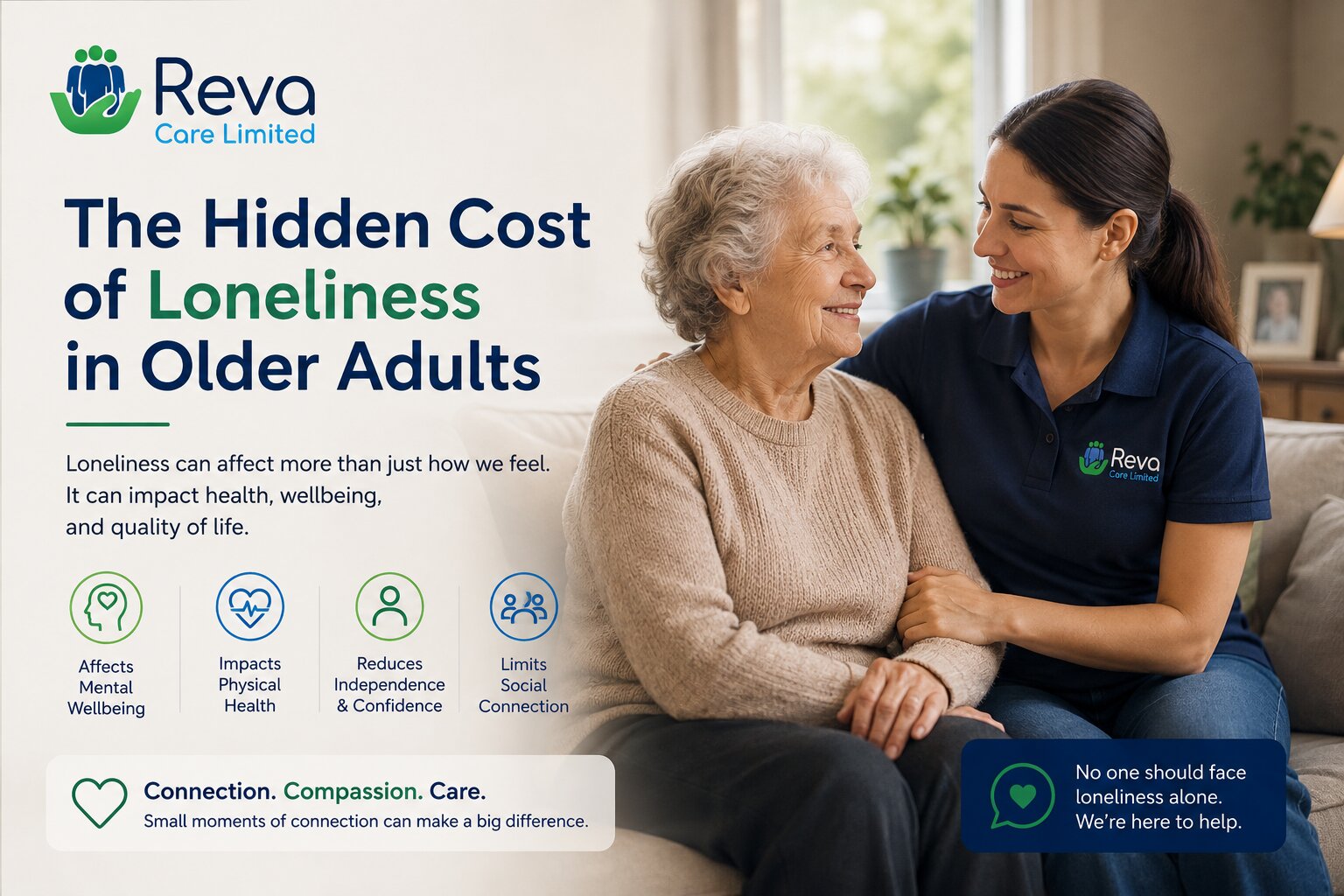
Loneliness can be difficult to see.
An older adult may live comfortably at home, have everything they need, and still spend most of their days without meaningful conversation or connection.
As people get older, life can change in ways that make staying connected more difficult. Retirement, bereavement, reduced mobility, health conditions, living alone, or having family members living further away can all contribute to loneliness and social isolation.
The NHS notes that older people can be particularly vulnerable to loneliness and social isolation, and that these can have serious effects on health and wellbeing.
So, what is the hidden cost of loneliness, and what can families and professional carers do to help?
Loneliness and social isolation are closely connected, but they aren't the same thing.
Social isolation generally refers to having limited social contact or relationships.
Loneliness is the feeling that the connections a person has don't meet the level of connection they want or need.
This means someone can live alone and feel perfectly content, while another person can be surrounded by people and still feel lonely.
The World Health Organization (WHO) recognises loneliness and social isolation as important social determinants of health and highlights the importance of meaningful social connections for physical and mental wellbeing.
Ageing itself doesn't automatically cause loneliness.
However, certain changes that can happen later in life may make maintaining relationships more difficult.
These can include:
Losing a spouse, partner, or close friend
Retirement and losing workplace connections
Reduced mobility
Long-term health conditions
Hearing or vision difficulties
Living alone
Moving away from familiar surroundings
Reduced access to transport
Family members living further away
The NHS identifies factors such as bereavement, illness, disability, becoming less physically able, and changes in family or working life as potential contributors to loneliness among older people.
Loneliness can gradually affect how someone feels about themselves and their everyday life.
An older adult experiencing loneliness may:
Lose confidence
Feel forgotten or unwanted
Withdraw from social activities
Experience low mood
Become anxious about leaving home
Lose interest in hobbies
Have less motivation to maintain routines
The WHO identifies loneliness and social isolation as important risk factors for mental health conditions in later life.
Loneliness can also create a difficult cycle:
Feeling lonely → withdrawing → fewer connections → feeling even lonelier.
Breaking this cycle can begin with something simple: meaningful human connection.
The hidden cost of loneliness isn't only emotional.
According to the WHO, social isolation and loneliness can have serious effects on physical and mental health, quality of life, and longevity.
Research and evidence reviewed by the WHO have linked social isolation and loneliness with a range of negative health outcomes.
This doesn't mean loneliness directly causes every health condition associated with it. Instead, it highlights why social connection should be considered an important part of healthy ageing.
Loneliness doesn't always look like sadness.
Sometimes it looks like:
An older adult who stops preparing their favourite meals because there's nobody to share them with.
Someone who stops going for their usual walk because they don't feel comfortable going alone.
A parent who stops calling their children because they don't want to "bother" them.
Someone who spends most of the day watching television because there is nobody to talk to.
These changes can be easy to overlook, especially when families are busy with their own responsibilities.
That's why paying attention to everyday behaviour matters.
Companionship isn't simply about having another person in the room.
It's about having someone who:
Listens
Remembers
Encourages
Shares interests
Creates conversation
Notices changes
Helps someone feel valued
A professional carer can provide regular companionship alongside practical support.
The goal isn't to replace family or friendships.
It's to provide another source of meaningful human connection.
Reducing loneliness doesn't always require a major change.
Small, consistent actions can make a difference.
A short conversation can give someone something to look forward to.
Help your loved one continue activities they already enjoy or explore something new.
A weekly family meal, regular walk, coffee visit, or community activity can provide structure and something to anticipate.
Technology can help older adults stay in touch with family and friends who live further away.
Community groups, volunteering, befriending services, and other social activities can create opportunities for meaningful connection.
The WHO highlights approaches such as community and support groups, befriending, social activities, and other interventions as ways of strengthening social connection among older adults.
Professional carers can play an important role in helping older adults feel more connected.
Their support may include:
Having conversations
Preparing meals together
Going for walks
Supporting hobbies
Accompanying clients to appointments
Encouraging social activities
Helping people stay connected with their communities
But one of the most valuable things a regular carer can do is notice when something has changed.
A carer who sees someone regularly may recognise that they seem quieter than usual, have stopped enjoying an activity, or are becoming increasingly withdrawn.
These observations can help families understand when additional support may be needed.
Growing older doesn't mean someone should become disconnected from the people and activities that give their life meaning.
The WHO describes loneliness and social isolation among older people as important public health concerns and highlights the need for stronger social connections.
The NHS also recommends simple ways of helping older people stay connected, including regular conversations, visits, shared activities, volunteering, and helping them get out into their communities.
Sometimes, the first step is simply asking:
"How have you been feeling lately?"
And then taking the time to genuinely listen.
At REVA Care Limited, we believe great care goes beyond completing everyday tasks.
Our platform helps families connect with professional carers who can provide practical assistance, companionship, and personalised support based on individual needs.
For someone who spends long periods alone, having a trusted professional carer visit regularly can provide not only practical support but also meaningful human interaction.
Whether someone needs help with everyday activities, companionship, or ongoing home care, finding the right professional can help make daily life feel more connected, supported, and meaningful.
Loneliness is something many people experience but don't always talk about.
We've shared this topic on LinkedIn to open a conversation about how families, communities, and professional carers can help older adults feel more connected.
👉 Join the conversation here:
What is one small thing we can do to help an older person feel less alone?
We'd love to hear your thoughts.
The hidden cost of loneliness isn't simply an empty calendar or a quiet house.
It can affect confidence, emotional wellbeing, physical health, independence, and quality of life.
But connection doesn't always require something complicated.
Sometimes it's a conversation.
A shared cup of tea.
A walk.
A familiar face.
Or simply knowing that someone will come back tomorrow.
Everyone deserves to feel seen, heard, valued, and connected at every stage of life.
Post a job or search by postcode to find a suitable carer.
SIGN UP NOWRegister your care home and connect directly with suitable carers.
REGISTER CARE HOMECreate your profile, complete verification and find local jobs.
SIGN UP NOW