


Care Support
Find Care
Post a job or search by postcode to find a suitable carer.
SIGN UP NOW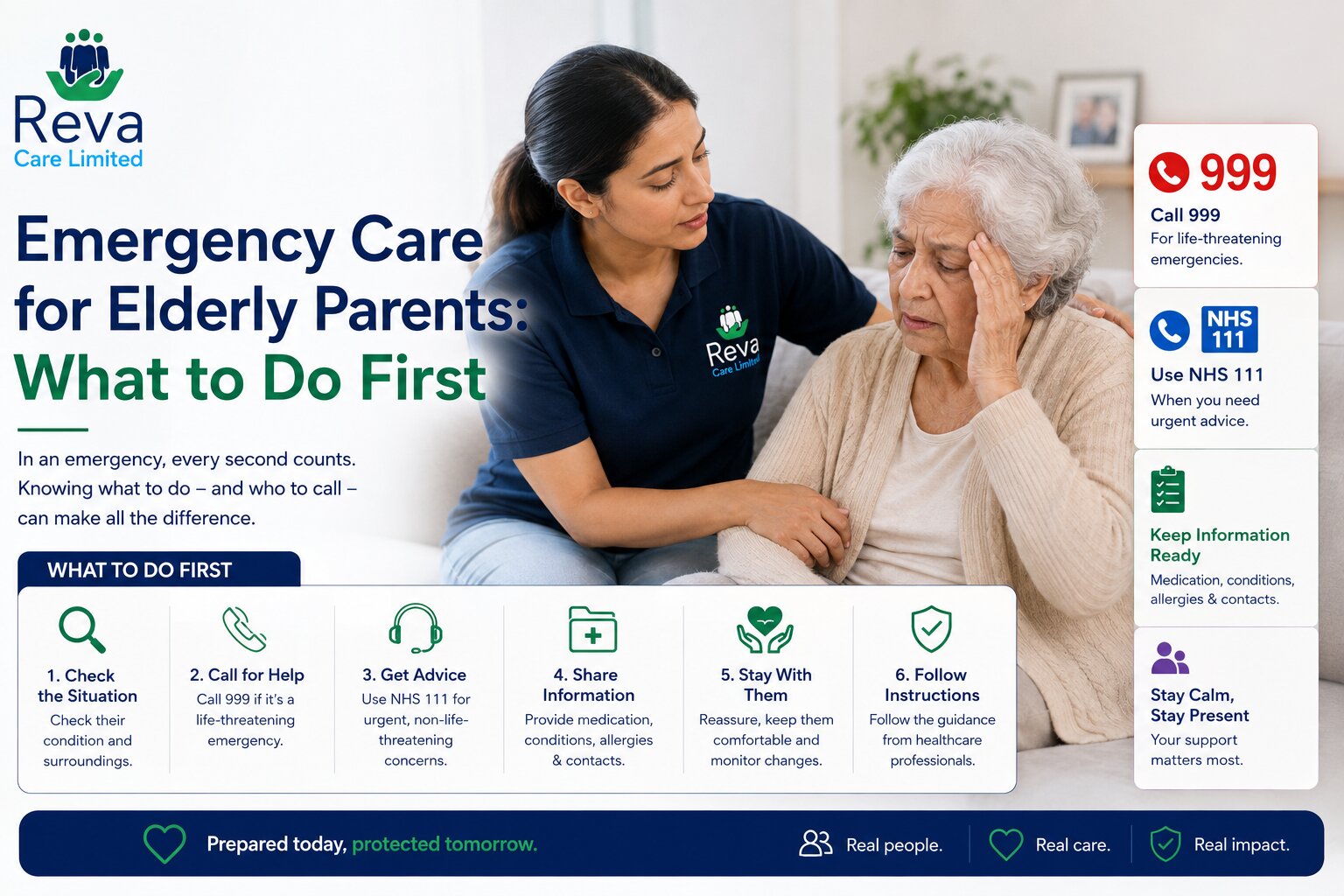
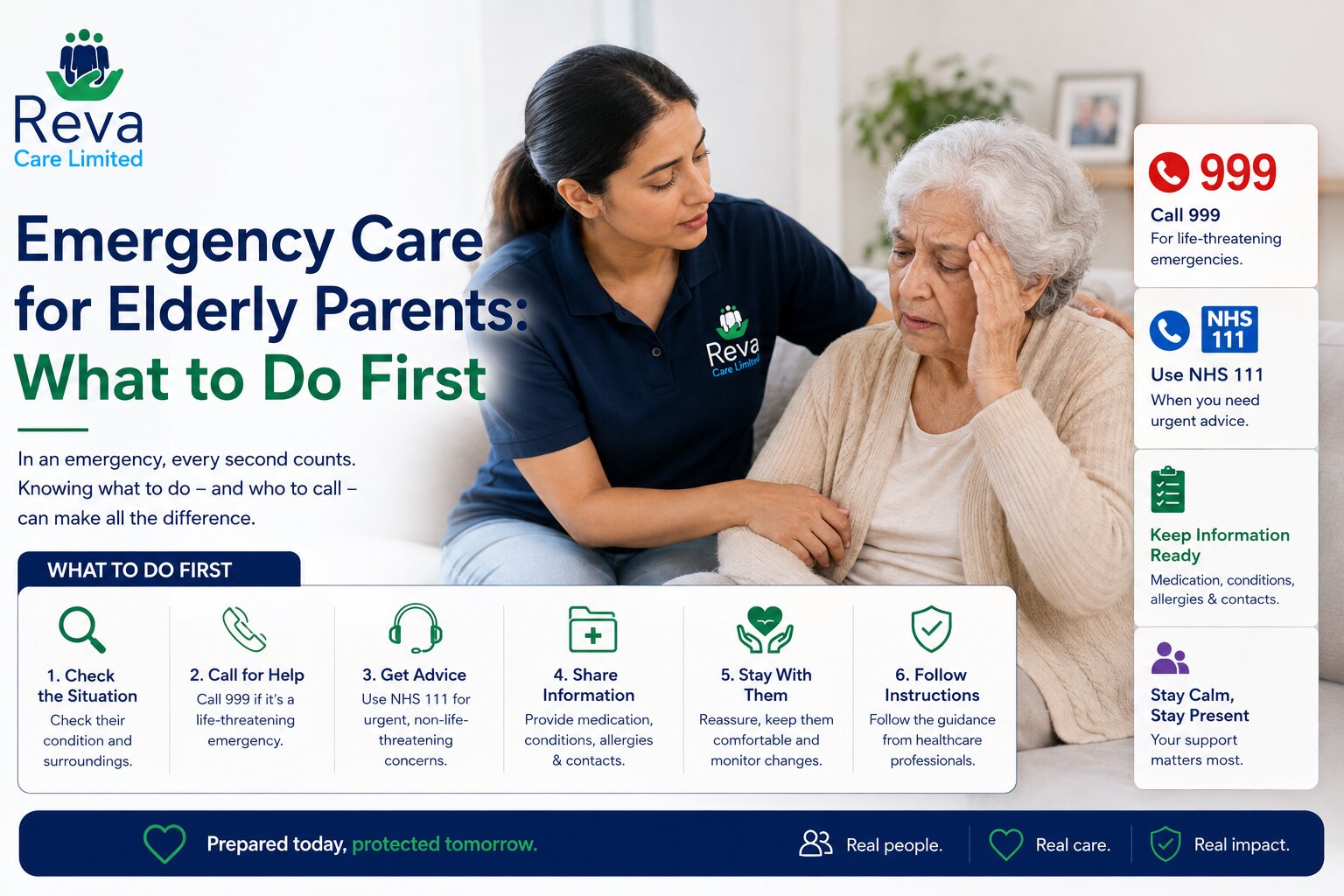
When an elderly parent suddenly becomes unwell, it can be difficult to think clearly.
A fall. Sudden confusion. Chest pain. Difficulty breathing. A suspected stroke.
In these moments, knowing what to do first can make a huge difference.
The most important thing is to stay calm, assess the situation and get the right help as quickly as possible.
This article provides general information and does not replace professional medical advice. If you believe someone is experiencing a life-threatening emergency, call 999.
Before doing anything else, check whether your parent is conscious and responding normally.
Ask yourself:
If the situation appears life-threatening, call 999 immediately.
The NHS explains that 999 is intended for life-threatening emergencies, including suspected strokes and heart attacks. If you're unsure whether an ambulance is needed, NHS 111 can assess the situation and advise what to do next.
A stroke can happen suddenly, and recognising the symptoms quickly is extremely important.
Remember FAST:
F – Face: Has one side of their face dropped?
A – Arms: Can they raise both arms?
S – Speech: Is their speech slurred, confused or unusual?
T – Time: Call 999 immediately.
The NHS also notes that stroke symptoms can include sudden weakness or numbness, vision problems, confusion, dizziness and severe headaches. Even if symptoms disappear, emergency medical help is still required.
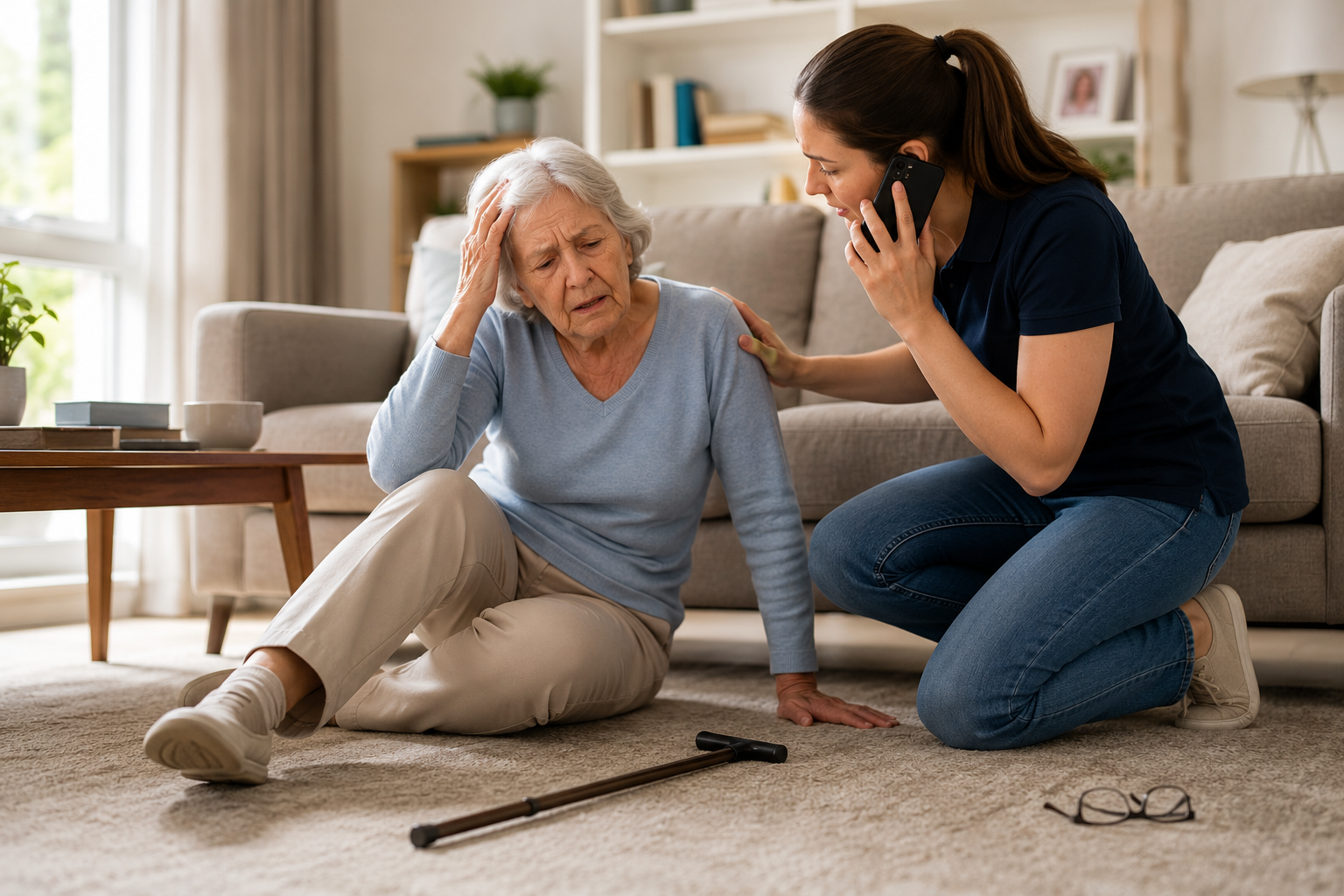
Falls can be particularly serious for older adults.
If your parent has fallen, first check whether they are injured and whether they can safely get up.
Don't try to lift them yourself if they are seriously injured or unable to get up.
The NHS advises calling 999 if someone has fallen and may have injured their head, back, neck or hip, or if they cannot get up. If they are able to get up safely, they should do so carefully rather than being rushed.
Age UK also recommends assessing injuries carefully after a fall and highlights the importance of getting help when an older person cannot safely get up.
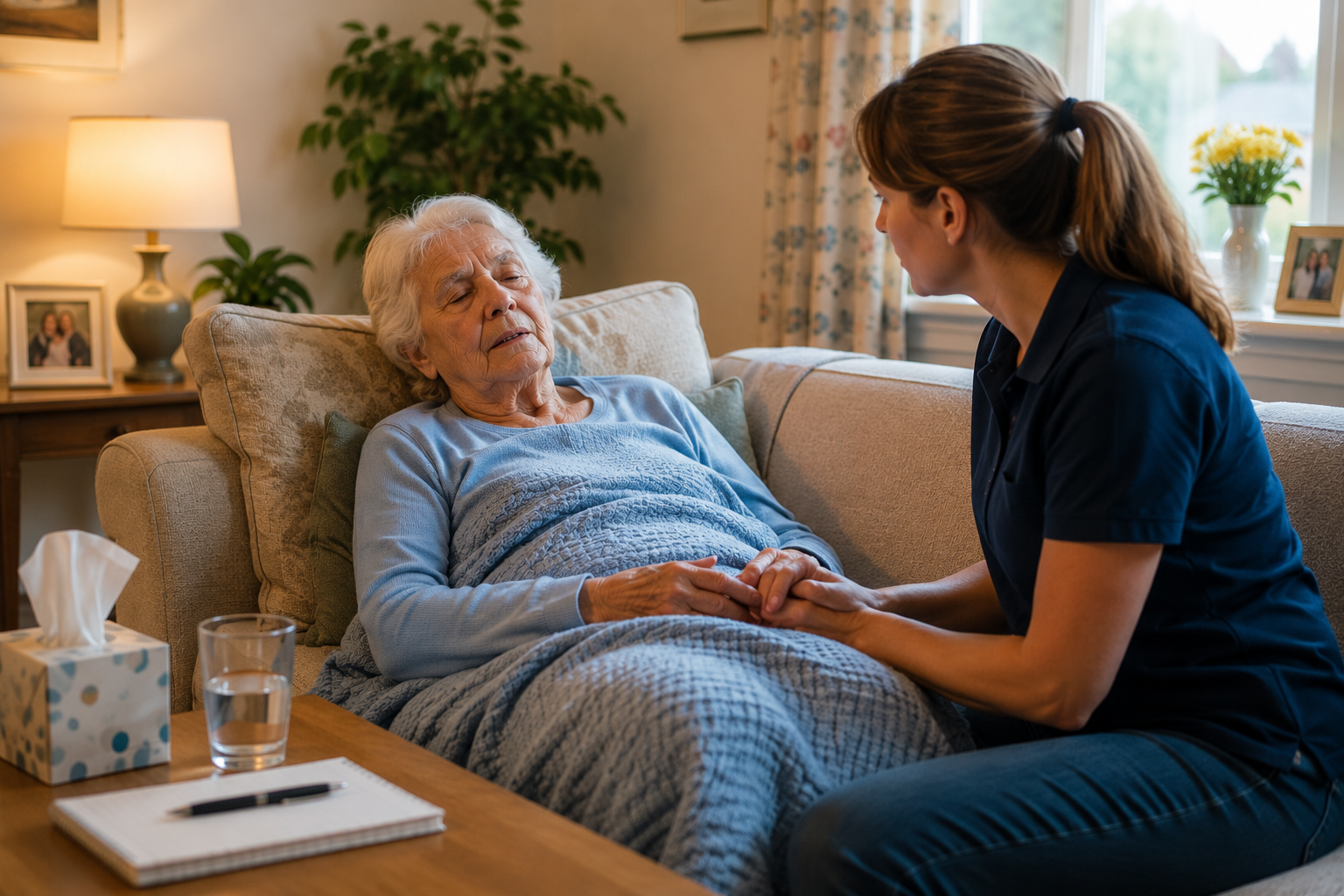
Once emergency help has been called, stay with your parent if it is safe to do so.
Keep them as comfortable and calm as possible.
You can:
The NHS recommends monitoring someone while waiting for help and keeping them warm and reassured.
If possible, have important information available for emergency responders.
This could include:
📋 Current medications
💊 Known allergies
🏥 Existing medical conditions
👨⚕️ GP details
📞 Emergency contacts
📝 Relevant care or treatment information
Having this information easily accessible can make it easier to communicate your parent's situation to healthcare professionals.
Sometimes your parent may suddenly feel unwell, but there may not be obvious signs of a life-threatening emergency.
If you're unsure what to do, NHS 111 can help assess the situation and direct you towards the appropriate service.
The important thing is not to ignore a significant or sudden change simply because you're uncertain about its seriousness.
The best time to prepare for an emergency is before one happens.
Create a simple emergency information sheet containing:
It can also be useful to make sure other family members and professional carers know where this information is kept.
Emergency care isn't only about knowing what to do after something happens.
It's also about reducing avoidable risks beforehand.
Age UK recommends looking at factors such as strength and balance, eyesight, footwear and home safety when trying to reduce the risk of falls.
Simple changes such as improving lighting, reducing clutter and keeping frequently used items accessible can help make a home safer.
Families don't always live close to their parents.
And even when they do, they can't necessarily be available around the clock.
A professional carer can provide regular support and may notice changes in a person's behaviour, mobility, routine or wellbeing that family members don't see every day.
This doesn't replace emergency medical services.
Instead, professional care can form part of a wider support network that helps older adults remain safe and supported in their everyday lives.
When something unexpected happens, try to remember:
Stay calm.
Check their condition.
Call 999 if it is life-threatening.
Use NHS 111 when urgent advice is needed but it isn't clearly an emergency.
Don't unnecessarily move someone who may have a serious injury.
Stay with them and follow professional instructions.
And perhaps most importantly:
Don't be afraid to ask for help.
Emergencies involving an elderly parent can be frightening, especially when you're suddenly expected to make decisions.
💬 Have you ever had to deal with an unexpected emergency involving an elderly parent or loved one?
What helped you stay calm and know what to do?
Share your experience below it could help another family prepare for a situation they haven't faced yet.
👉 Continue the conversation with us on LinkedIn:
[LinkedIn Post]
You can't predict every emergency.
But you can prepare for one.
Knowing the warning signs, keeping important medical information accessible and understanding when to call 999 or NHS 111 can make an overwhelming situation easier to navigate.
And for families supporting an ageing parent, having the right professional care network can provide additional reassurance every day — not just when something goes wrong.
Because good care isn't only about responding when there's an emergency. It's about helping people stay safe, supported and independent before one happens.
Post a job or search by postcode to find a suitable carer.
SIGN UP NOWRegister your care home and connect directly with suitable carers.
REGISTER CARE HOMECreate your profile, complete verification and find local jobs.
SIGN UP NOW