


Care Support
Find Care
Post a job or search by postcode to find a suitable carer.
SIGN UP NOW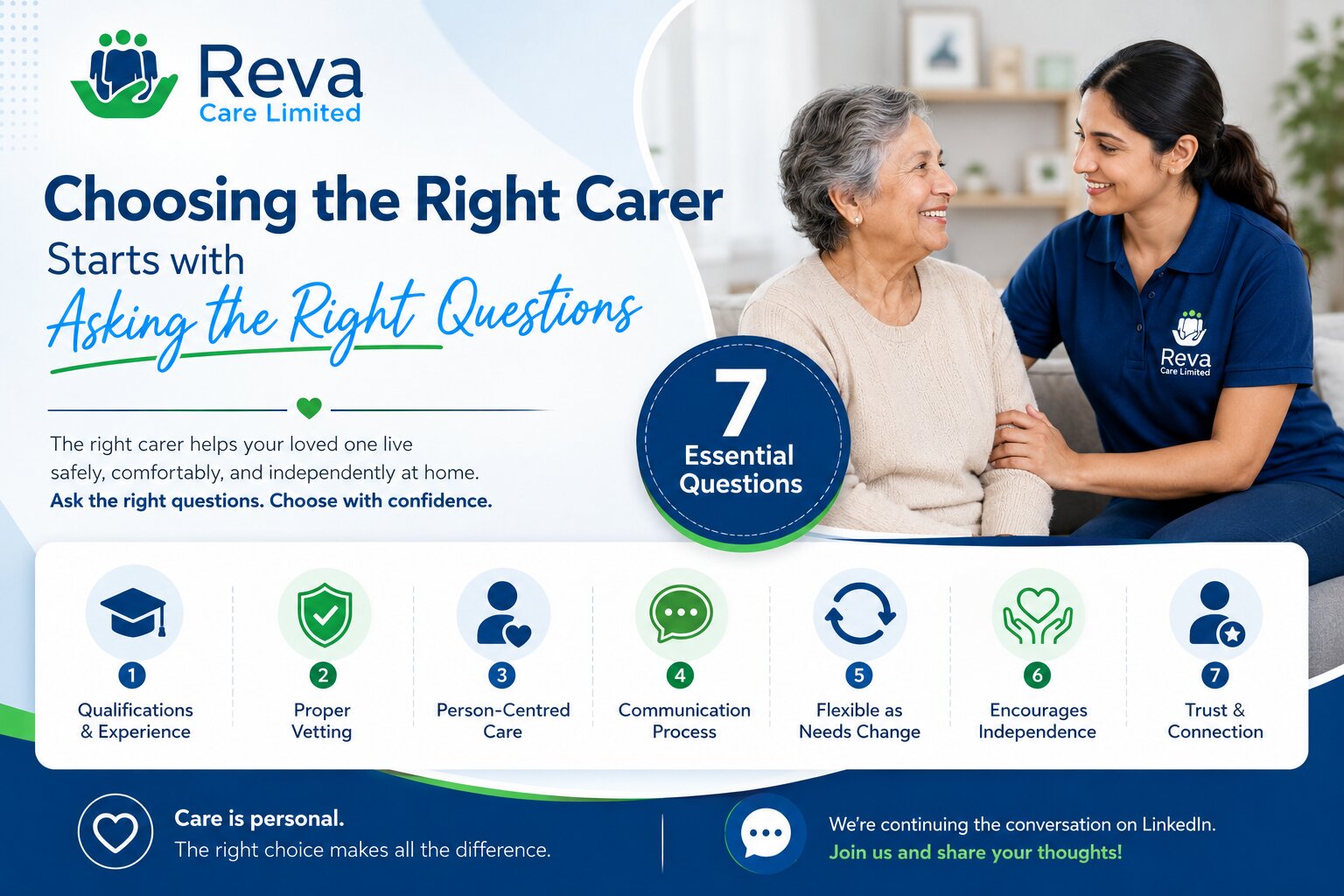
Choosing a professional carer is one of the most important decisions a family can make. The right person can help an older adult remain independent, safe, and confident while continuing to live comfortably at home. The wrong choice, however, may create unnecessary stress for both the individual receiving care and their loved ones.
According to the NHS Social Care and Support Guide, arranging care early allows families to explore options thoughtfully rather than making rushed decisions during a crisis.
Whether you're arranging support for an ageing parent, a loved one recovering from hospital treatment, or someone living with a long-term condition, asking the right questions can help you choose care with confidence.
Every person's care needs are different.
Some individuals may only require companionship and support with everyday activities, while others need specialist assistance for conditions such as dementia, Parkinson's disease, stroke recovery, or reduced mobility.
Before making a decision, ask about:
Relevant care qualifications
First Aid training
Moving and Handling certification
Dementia awareness training
Medication support experience
Previous experience with similar care needs
The Skills for Care organisation recommends ensuring carers have appropriate training and continuous professional development to deliver safe, high-quality care.
Professional carers work closely with vulnerable adults, making trust and safeguarding essential.
Ask whether the carer has completed:
Enhanced DBS checks
Identity verification
Right-to-work checks
Professional references
Employment history verification
The Disclosure and Barring Service (DBS) explains how these background checks help protect vulnerable adults by ensuring suitable individuals work in care settings.
Excellent care goes beyond completing tasks.
It should reflect the individual's:
Daily routines
Personal preferences
Cultural background
Dietary requirements
Hobbies
Communication style
Independence goals
The National Institute for Health and Care Excellence (NICE) identifies person-centred care as a fundamental principle of delivering safe, effective, and compassionate health and social care.
Families want reassurance even when they can't be present every day.
Ask how updates will be shared:
Care notes
Progress updates
Emergency contact procedures
Secure communication
Family involvement
Clear communication creates trust and helps everyone stay informed.
Care requirements often evolve over time.
Ask whether support can adapt if your loved one's circumstances change.
For example:
Additional weekly visits
Overnight care
Respite care
Holiday cover
Emergency care
Hospital discharge support
The Care Quality Commission (CQC) encourages providers to deliver care that is responsive to people's changing needs.
Professional carers should support independence rather than replace it.
A good carer helps individuals continue doing as much as they safely can themselves while providing assistance when required.
According to Age UK, maintaining independence contributes significantly to wellbeing, confidence, and quality of life in later years.
Sometimes the most important question isn't about qualifications.
It's about connection.
Does the carer:
Listen carefully?
Show empathy?
Respect dignity?
Communicate clearly?
Make your loved one feel comfortable?
Compassion cannot be measured on paper, but it often makes the greatest difference in everyday care.
At REVA Carer, we believe families deserve greater transparency when choosing care.
Our platform helps families connect with verified professional carers while allowing them to review profiles, experience, skills, and availability before making a decision.
Rather than simply finding someone available, families can choose the professional who best matches their loved one's individual needs.
Choosing a professional carer is a decision that deserves careful thought, and every family's experience is different.
We recently shared this topic on LinkedIn and invited families and care professionals to discuss the most important questions they would ask before choosing a professional carer.
👉 Join the conversation here:
[LinkedIn Post]
Have a question or an experience you'd like to share? We'd love to hear your perspective in the comments.
Choosing a professional carer isn't simply about finding support.
It's about finding someone who will become a trusted part of your loved one's daily life.
By asking these seven questions, families can make informed decisions, build stronger relationships with carers, and help their loved ones continue living safely, independently, and with dignity.
Post a job or search by postcode to find a suitable carer.
SIGN UP NOWRegister your care home and connect directly with suitable carers.
REGISTER CARE HOMECreate your profile, complete verification and find local jobs.
SIGN UP NOW