


Wellness
Find Care
Post a job or search by postcode to find a suitable carer.
SIGN UP NOW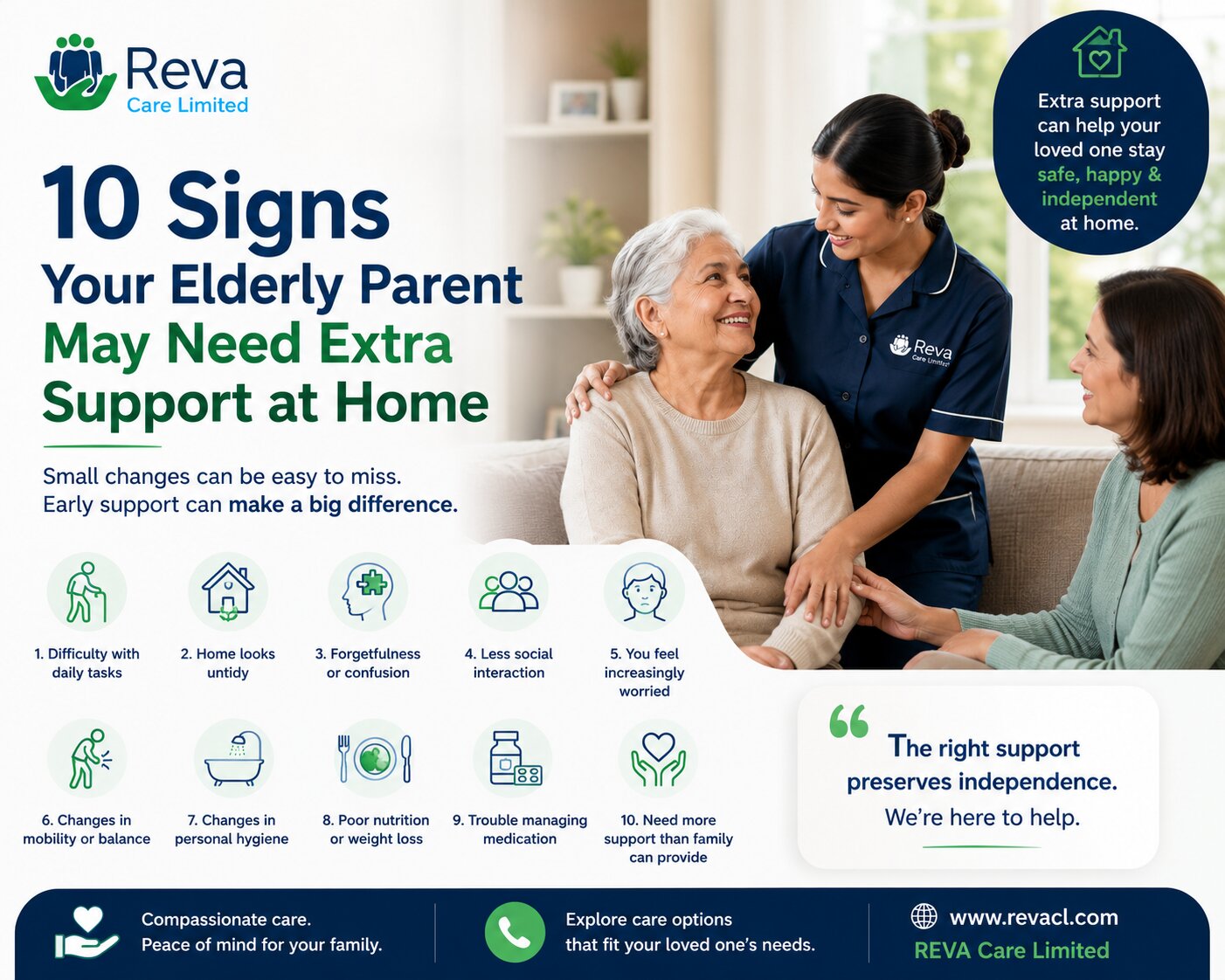
Watching a parent grow older can be emotional.
Many older adults value their independence and want to continue living in the comfort of their own home for as long as possible. While ageing is a natural part of life, there are times when small changes in health, mobility, or daily routines may indicate that additional support could make life safer, easier, and more enjoyable.
The challenge is that these changes often happen gradually.
Families may not notice them until everyday tasks become difficult—or until an unexpected incident, such as a fall or missed medication, highlights the need for extra help.
Recognising the signs early allows families to explore support options before a crisis arises, helping older adults maintain their independence while receiving the care they need.
According to the NHS Social Care and Support Guide, early support can help people remain independent for longer and improve their overall quality of life.
Has your parent started struggling with activities they once managed easily?
This could include:
Difficulty with routine activities may suggest that additional support would improve both safety and confidence.
A home often reflects a person's wellbeing.
You might notice:
These changes don't necessarily mean someone can no longer live independently—but they may indicate they're finding everyday responsibilities more challenging.
Everyone forgets things occasionally.
However, frequent memory lapses may be worth discussing if they involve:
The Alzheimer's Society provides helpful guidance on recognising changes in memory and when families should seek advice.
Has your parent stopped attending social activities they once enjoyed?
Loneliness and isolation can affect both physical and mental health.
Warning signs include:
Research from Age UK highlights that staying socially connected plays an important role in maintaining wellbeing as we age.
Sometimes the biggest sign isn't something obvious.
It's a feeling.
You find yourself checking in more often.
Wondering if they've eaten.
Calling multiple times each day.
Feeling anxious whenever they don't answer the phone.
Trust your instincts.
Family members often notice subtle changes before they become serious problems.
Changes in balance or mobility can increase the risk of falls.
Look out for:
According to the NHS, falls are one of the leading causes of injury among older adults, making early intervention especially important.
A noticeable change in appearance may indicate that daily routines are becoming harder.
You may notice:
Approaching these conversations with empathy rather than criticism can help preserve your parent's dignity while opening the door to additional support.
Nutrition is essential for healthy ageing.
Warning signs include:
Poor nutrition can affect energy levels, immune function, and overall wellbeing.
Medication routines often become more complex with age.
Watch for:
Professional carers can help provide reminders and establish routines that support safe medication management.
Many families do an incredible job supporting loved ones.
But balancing work, childcare, personal responsibilities, and caregiving can become overwhelming.
Seeking additional support isn't a sign of failure.
It's often the best way to ensure your parent receives consistent, compassionate care while allowing family members to focus on spending quality time together.
How many of these signs have you noticed?
☐ Difficulty with daily activities
☐ Increased forgetfulness
☐ Reduced mobility
☐ Missed medication
☐ Poor nutrition
☐ Declining personal hygiene
☐ Less social interaction
☐ Untidy home
☐ Increased family concern
☐ Frequent falls or balance issues
If you've noticed two or more of these signs, it may be worth exploring additional support options.
Extra support doesn't necessarily mean giving up independence.
In many cases, home care helps people continue living safely in the place they know and love.
Professional carers can provide support with:
The goal isn't to replace independence.
It's to help maintain it.
At REVA Care, we believe every family deserves peace of mind.
Our platform connects families with verified care professionals who can provide compassionate, person-centred support tailored to individual needs.
Whether your loved one needs occasional assistance or more regular care, having the right support in place can make everyday life safer, more comfortable, and more fulfilling.
Because the best care doesn't take independence away.
It helps protect it.
Many families don't realise their loved one needs extra support until a crisis occurs.
We recently shared this conversation on LinkedIn and invited families to share the signs they noticed first.
👉 Read the original LinkedIn discussion here:
LinkedIn Post
We'd love to hear your experience.
Growing older doesn't mean giving up independence.
It means adapting to new needs with the right support at the right time.
Recognising these signs early allows families to make thoughtful decisions, reduce stress, and help loved ones continue enjoying life safely at home.
Post a job or search by postcode to find a suitable carer.
SIGN UP NOWRegister your care home and connect directly with suitable carers.
REGISTER CARE HOMECreate your profile, complete verification and find local jobs.
SIGN UP NOW